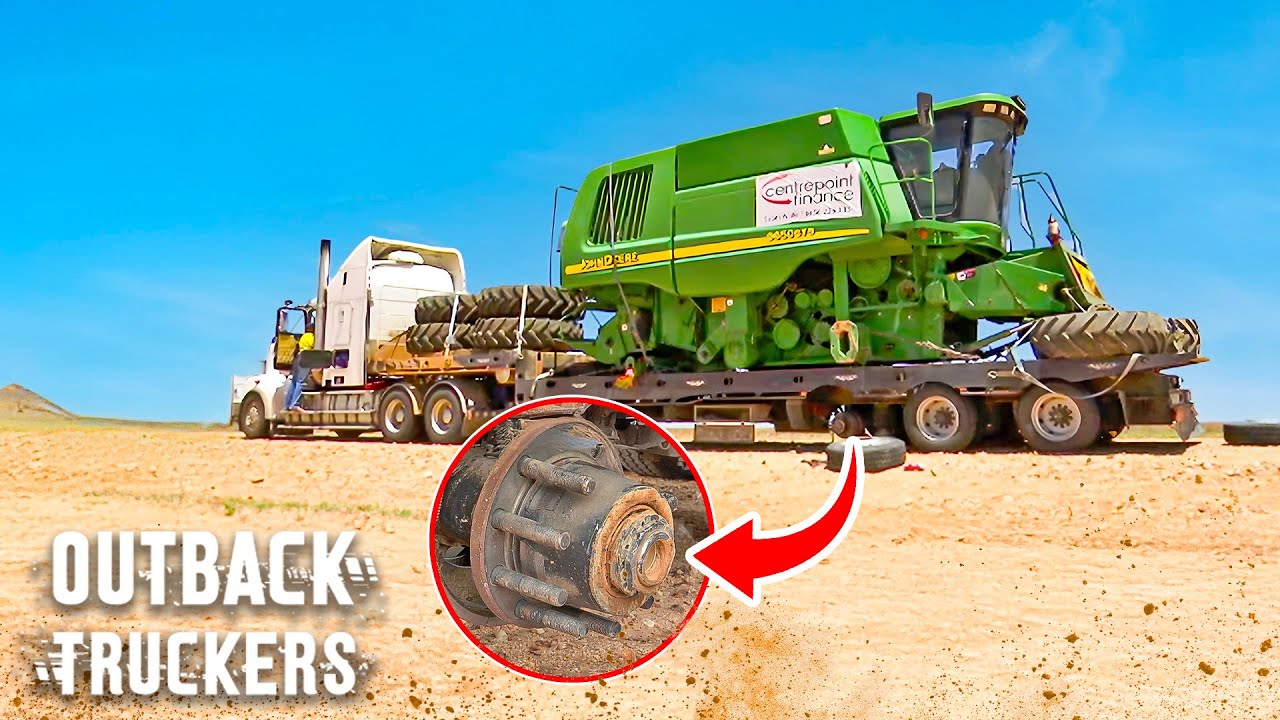
Outback Truckers’ gripping episode follows father and son team John and Justin Harrison on one last heavy-haul as John edges towards retirement. This article retells that journey — the load, the remote route, the catastrophic failure, the emergency repairs and the long crawl to safety — and highlights practical lessons about safety, equipment and the chain of responsibility; CoR that apply to every heavy vehicle operator.
Table of Contents
- Quick summary
- The load, the route and the risk
- When two wheels come off: what happened
- Emergency repairs under the trailer
- The crawl to Birdsville and beyond
- Delivery and reflection
- Lessons learned: safety, preparation and chain of responsibility; CoR
- FAQ
- Final thoughts
Quick summary
- Load: a 30‑tonne combine harvester, partially disassembled for transport.
- Route: Birdsville Track — roughly 500 km of remote corrugated dirt across desert, then 1,700+ km to Mackay.
- Key incident: two wheels torn off an axle on dirt, followed by airbag and hose damage that trapped Justin under the trailer for over an hour.
- Outcome: improvised repairs (hose sealed with cable ties, airbags re‑inflated, axle chained) and a slow, tense run to Mackay where the harvester was delivered.
The load, the route and the risk
John and Justin set out with a large, oversized grain harvester — a 30‑tonne, multi‑dimensional load that had to be partially broken down to fit. Justin fuelled up with around 1,500 litres (enough for roughly 30 cars) before heading into a landscape where help is often hours or days away.
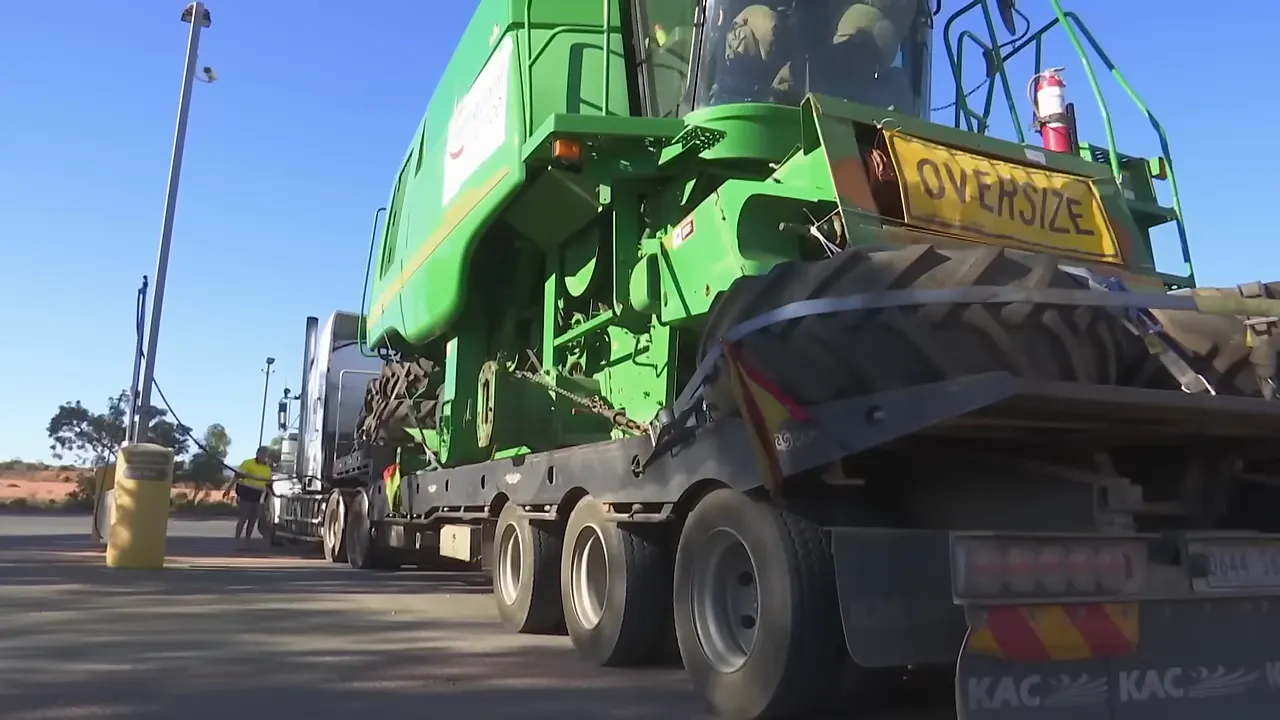
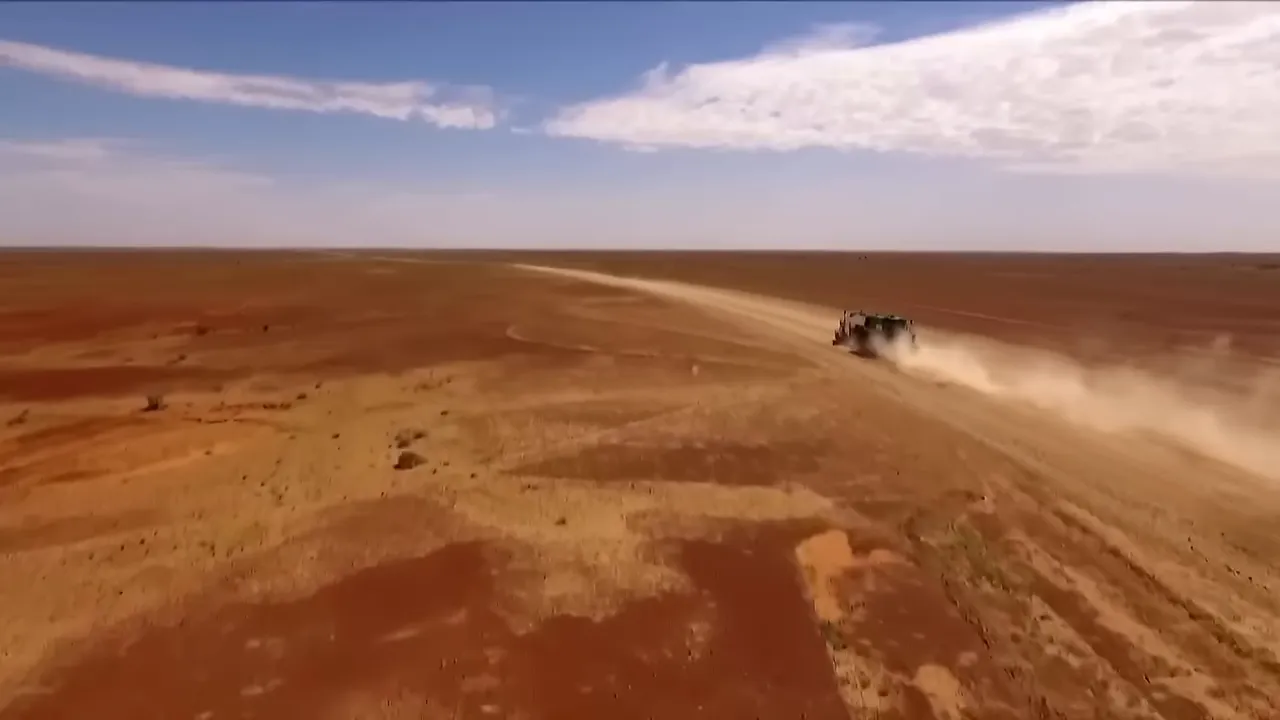
The Birdsville Track is unforgiving: 500 km of corrugated dirt, soft patches, water‑slick potholes and extreme heat. The pair knew the consequences of getting it wrong — “you’re playing for keeps” — but the realities still bit hard.
When two wheels come off: what happened
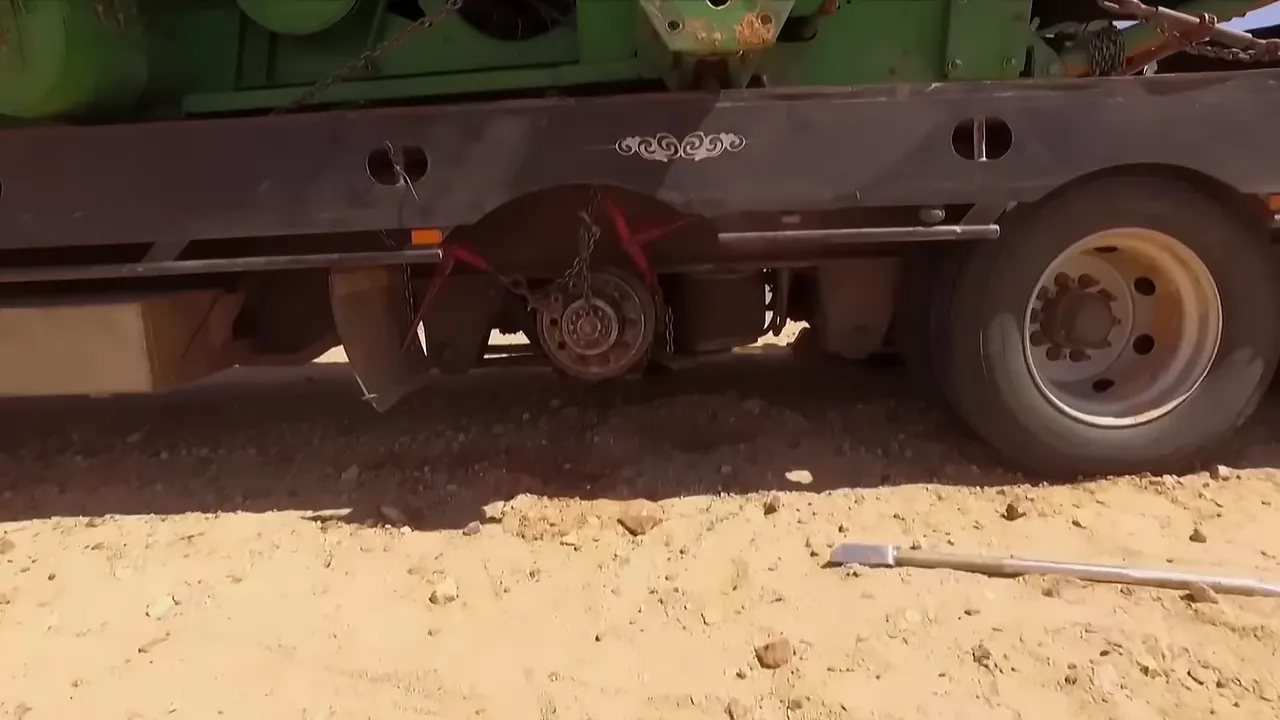
About 312 km into the dirt section, Justin noticed the truck “labouring” and they pulled up. The inspection revealed two wheels torn clean from the axle and major sidewall damage to a new tyre — an estimated $500–$600 loss just for the tyre, with other damage adding up fast.
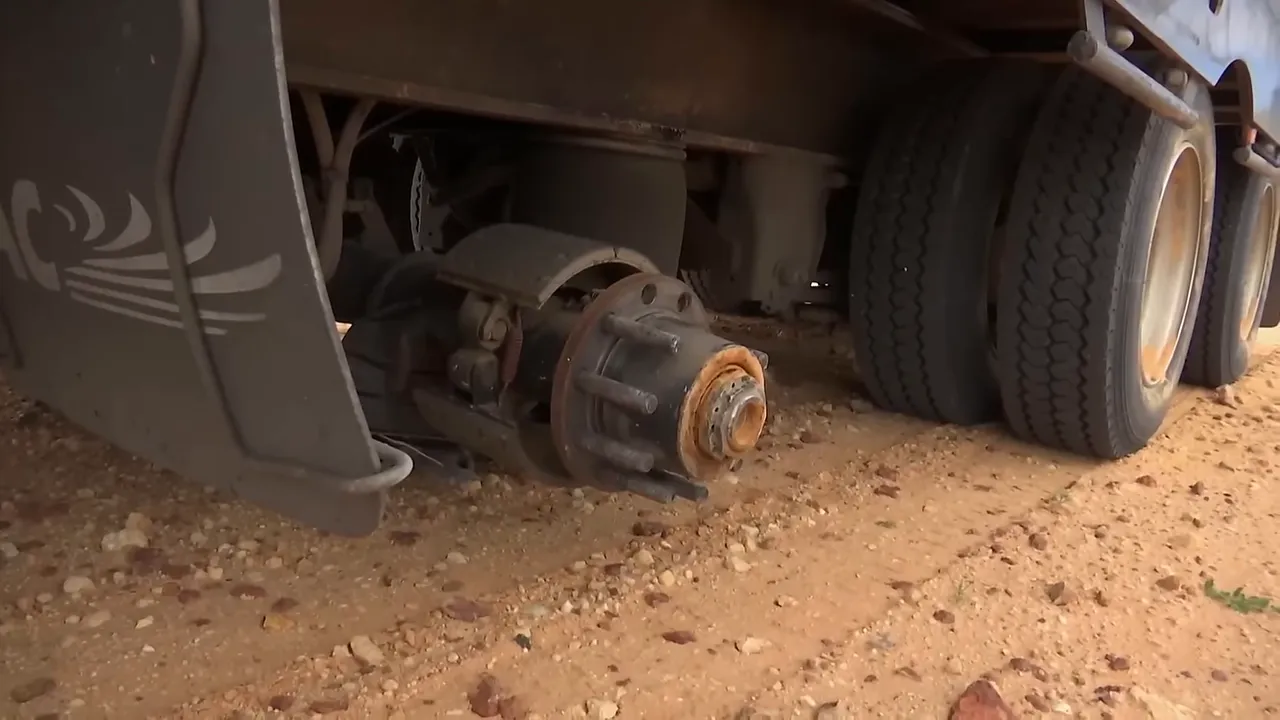
With no mobile service and no immediate help available, options were limited: recover the wreckage, jury‑rig repairs and try to reach Birdsville 200 km away, or be stranded in searing desert heat (up to 46°C at one point).
Emergency repairs under the trailer
To access the undercarriage Justin had to deflate airbags and crawl beneath the loaded trailer. When airbags let down, the trailer dropped — very dangerous with 40 tonnes of vehicle and load above. At one point Justin was effectively trapped: “If I’m too fat to get out” was the light, gallows humour amidst the risk.
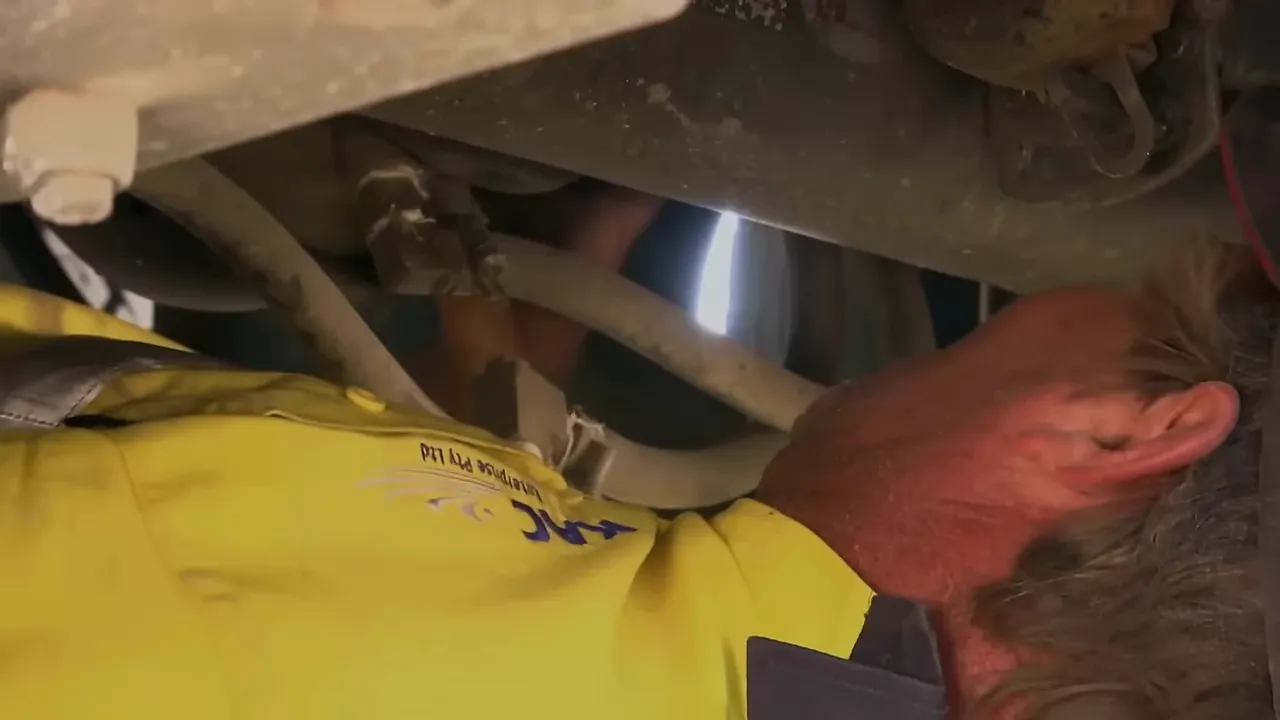
Complications mounted when a hose hanging down prevented the airbags from holding pressure. Justin, blinded by dust and wind, improvised: cable ties and careful sealing gave them enough air to raise the trailer and free him after more than an hour. That quick thinking under stress saved days of delay.
The crawl to Birdsville and beyond
With the damaged axle chained in place and the load effectively carried on “two and a half axles,” the truck crawled into Birdsville at very low speed. Tyre temperatures were a constant worry — tyre temps rose dramatically (the team noticed increases of ~20°C on checks), and any blowout could have been catastrophic.
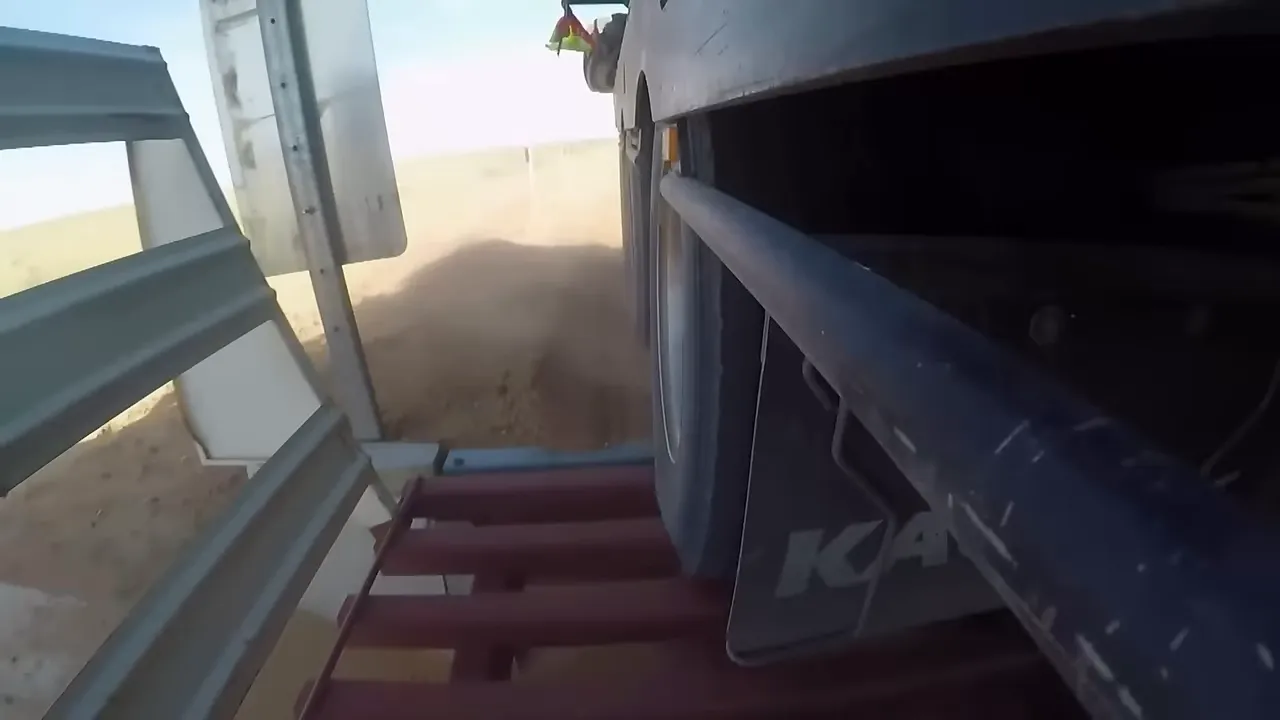
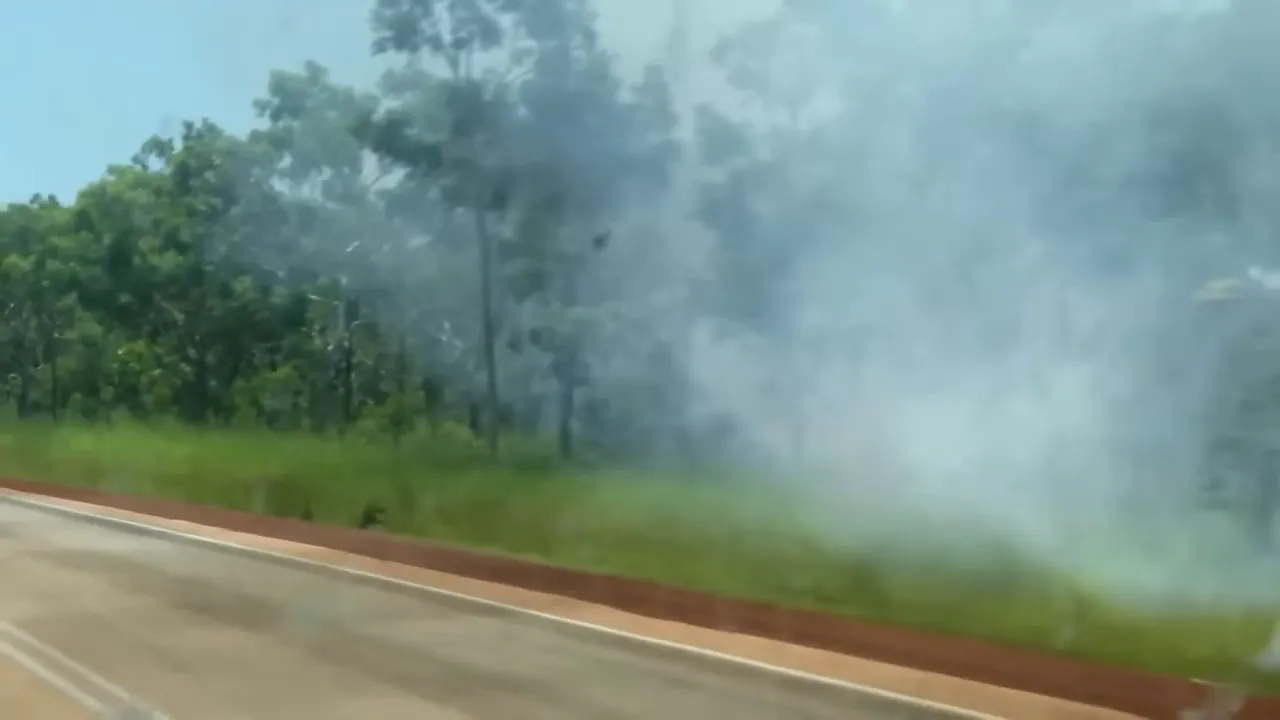
After repairs were still impossible locally, they headed on: more dirt detours (an unexpected 78 km dirt section), blind dust when meeting other road trains, high ambient temps (41–42°C predicted) and even bushfire haze near coastal Queensland threatened their final sprint to Mackay.
Delivery and reflection
Despite the setbacks the harvester arrived in one piece at Mackay and the farmer was relieved. The truck, however, had suffered and the pair admitted it had been one of the toughest runs in decades of outback trucking. For John, this was a final, hard‑earned hurrah before retirement.
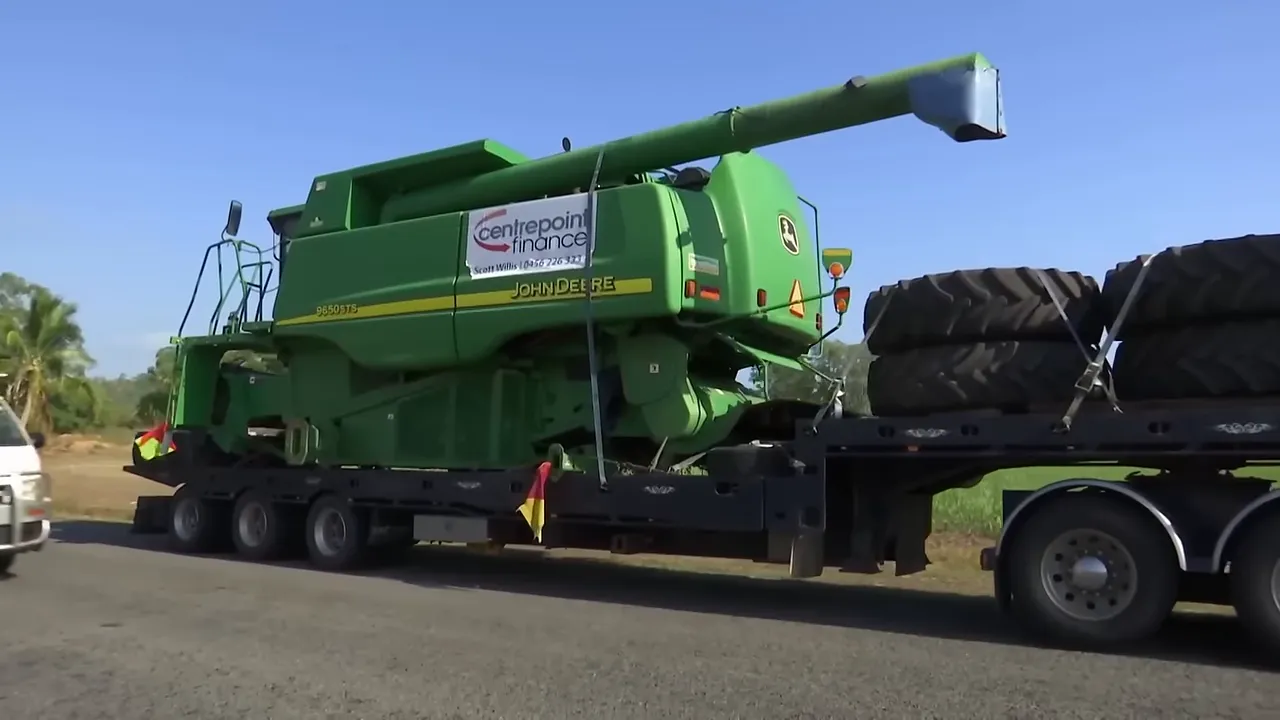
“This is probably the last big long trip I’ll be doing… I just like being with him.” — John
Lessons learned: safety, preparation and chain of responsibility; CoR
The episode is a case study in how remote breakdowns escalate and why formal responsibilities matter. Key takeaways for operators and consignors include:
- Pre‑trip checks: ensure wheel nuts, suspension components and hoses are secured and inspected before remote runs.
- Redundancy and spares: carry essential spares (tyre repair kit, replacement hoses, cable ties, air‑line connectors) and know how to use them under pressure.
- Fatigue and planning: plan rest breaks, swap drivers where possible and avoid pushing runs in extreme heat to reduce human error.
- chain of responsibility; CoR awareness: parties in the transport chain (loaders, schedulers, operators) must understand duties — from load restraint and route choice to providing support where a high‑risk load is moved through remote terrain.
Remember: chain of responsibility; CoR is not just paperwork — it’s about practical steps that reduce the chance of a breakdown becoming life‑threatening. On remote runs, decisions by consignors, schedulers and drivers directly affect safety outcomes.
FAQ
Q: Could this have been avoided?
A: Some elements might have been mitigated with more conservative tyre and suspension checks, route timing to avoid worst heat, and ensuring spares and repair fittings (air‑line joins, hose clamps) were immediately accessible. But the outback always carries inherent risk.
Q: What tools helped them get free under the trailer?
A: Simple items: cable ties, rubber pads/blocks and the truck’s air system. Improvisation and calm decision‑making were crucial.
Q: How does chain of responsibility; CoR apply here?
A: chain of responsibility; CoR requires all parties to consider risks and act to mitigate them — from correctly securing oversize loads to ensuring drivers are not pressured into unsafe scheduling or routes through hazardous terrain.
Q: Is it safe to run such heavy loads on the Birdsville Track?
A: It can be, with the right prep: appropriate route choice, vehicle set‑up, experienced crews, contingency planning and an understanding by all parties of the chain of responsibility; CoR obligations.
Final thoughts
John and Justin’s trip condensed a career’s worth of outback risks into one exhausting run: lost wheels, near‑crushing, improvised repairs, blistering heat and bushfire smoke. Their success owed as much to experience and quick thinking as to brute resilience. For operators, the practical lessons echo a broader safety message: plan thoroughly, carry the right spares, check equipment often and respect the chain of responsibility; CoR so every remote haul ends with everyone back in one piece.
Video credit: Outback Truckers
This article was created from content published by https://www.nhvr.gov.au/. Visit the site for latest and current information.


