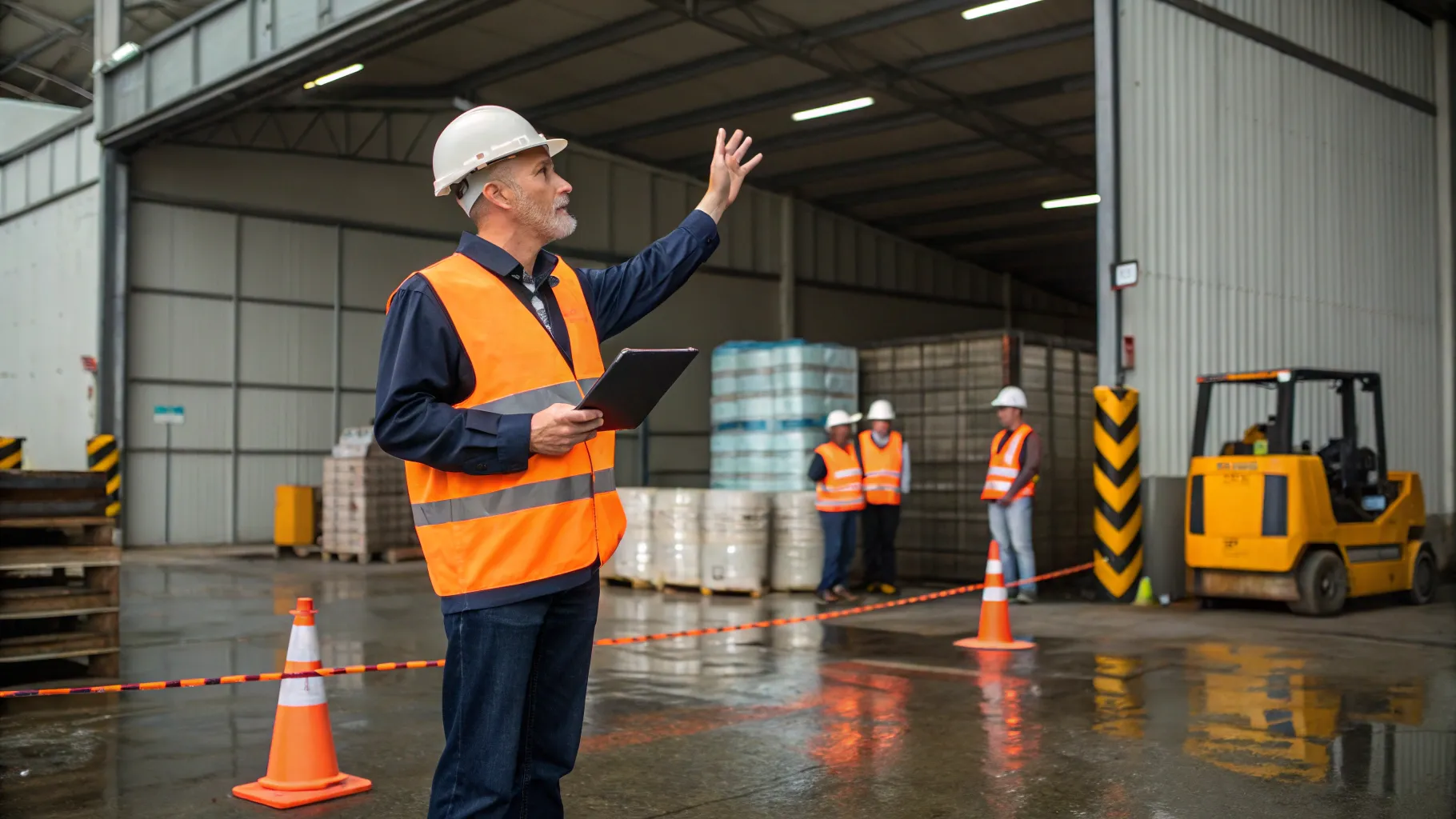
The chain of responsibility is not an abstract compliance exercise — it is a legal duty that sits with leaders on the front line of safety. This article explains the four most common chain of responsibility hazards you will meet every day and gives clear, practical actions you must take the moment you spot them. Read on to turn obligations into operational steps you can rely on.
Use this as a straightforward reference for on-site decision making: identify the hazard, control the situation, and report it. Repeat. The chain of responsibility requires nothing less.
Table of Contents
- Why the chain of responsibility matters
- 1. Non-compliant vehicles — spot, quarantine, report
- 2. Time slots and scheduling pressure — design for safety
- 3. Untrained workers — verify competency before work
- 4. Impaired workers — act immediately and decisively
- Making the call when safety and commercial pressure collide
- Quick checklist for leaders
- FAQs
- Final thought
Why the chain of responsibility matters
When you see a problem, a clear warning sign, and you do nothing, a court will see that as you personally failing in your duty.
That quote captures the legal standard. If a risk is obvious and you ignore it, you are not simply following bad practice — you may be breaching your legal obligations under the chain of responsibility. This article focuses on four hazards that routinely create that exposure: unsafe vehicles, rigid time slots, untrained workers and impaired workers.
1. Non-compliant vehicles — spot, quarantine, report
Example: a subcontractor's truck arrives with a bald tyre, a smashed tail light and an oil leak. The risk is twofold — immediate harm to your people while loading and an unsafe vehicle sent back onto the public road.
- Identify — train your gate team to recognise obvious defects (tyres, lights, fluid leaks, insecure loads).
- Control — have a documented quarantine or rejection process. Move the vehicle to a safe area and stop work immediately.
- Report — record the defect, notify the vehicle operator and inform your leadership every time.
Your legal duty under the chain of responsibility always overrides commercial pressure or customer agreements. Rejecting an unsafe vehicle is not optional — it is required and defensible.
2. Time slots and scheduling pressure — design for safety
A rigid, unforgiving booking system can push drivers to speed, skip mandatory rest breaks or queue unsafely. When your schedule creates that pressure, you become a contributor to fatigue and speeding — and liable under the chain of responsibility.
- Build flexibility into booking systems so drivers are not forced into unsafe choices.
- Communicate a late-arrival process so drivers can safely notify you instead of improvising risky behaviour.
- Measure site performance (gate-to-gate times) and fix delays that cause downstream risk.
Treat the schedule as a risk-management tool first and a timing tool second. The priority is safety, not strict on-time delivery.
3. Untrained workers — verify competency before work
Any person performing a safety-critical job without verified skills is a significant risk. Examples include an expired forklift licence, a planner unfamiliar with fatigue rules, or an uninducted contractor.
- Verify competency — maintain an auditable system for training records and licence expiries.
- Induct everyone — contractors and visitors get role-specific induction before they start.
- Supervise new workers — confirm training sticks through observation and documented checks.
Rule: no training, no task. A worker must not perform safety-critical functions until you have personally verified and documented competence.
4. Impaired workers — act immediately and decisively
Impairment from alcohol or drugs is an immediate extreme safety risk. The chain of responsibility requires swift action the moment you have reasonable suspicion.
- Have a clear policy — typically zero tolerance for impairment on safety-sensitive duties.
- Train leaders — recognise signs (slurred speech, erratic behaviour, smell of alcohol) and know your removal process.
- Remove and secure — take the person off safety-sensitive duties and arrange safe transport home. Do not let them continue working or drive.
You do not need a breathalyser to act. The legal standard for leaders is reasonable suspicion, not proof. State the concern calmly, remove the risk and follow company procedure.
Making the call when safety and commercial pressure collide
Leaders will face moments when safety and commercial interests pull in opposite directions. The chain of responsibility clarifies which way you must lean: safety first. Turning away an unsafe vehicle or stopping work to protect people is a legally supported action — it will be defensible if challenged.
- Be prepared — practice rejection, quarantine and removal procedures so decisions are quick and consistent.
- Document everything — records protect your team and your organisation by showing the steps you took.
- Lead by example — make safety the default, not the exception.
Quick checklist for leaders
- Train gate staff to identify vehicle defects and follow quarantine procedures.
- Design booking systems with flexibility and a late-arrival protocol.
- Verify and document competency before anyone performs safety-critical tasks.
- Implement a clear impairment policy and remove anyone suspected of being impaired.
- Record every decision and communicate up the chain of command.
FAQs
What does reasonable suspicion mean for a leader under the chain of responsibility?
Reasonable suspicion means you act on observable signs (speech, behaviour, smell, visible defects) rather than waiting for definitive proof. Your immediate duty is to remove the risk and follow company procedure.
Can I refuse to load a subcontractor's truck and be liable for their time?
No. Your legal duty to ensure safety under the chain of responsibility takes precedence over commercial concerns. Rejecting an unsafe vehicle is a required and defensible action.
How should time slots be managed to reduce risk?
Design booking systems with built-in buffer time, a clear late-arrival process, and continuous monitoring of site performance so delays are identified and fixed before they create pressure on drivers.
What documentation is required when an unsafe condition is found?
Record the defect or incident, the action taken (quarantine, removal, rejection), notifications to the operator and leadership, and any follow-up steps. Maintain these records as part of your safety management system.
Final thought
Every day will bring choices where safety and commercial pressure collide. Under the chain of responsibility, the right answer is clear: protect people, document the action, and lead. When the moment comes, ask yourself which choice will actually protect you and the team — then make it.


