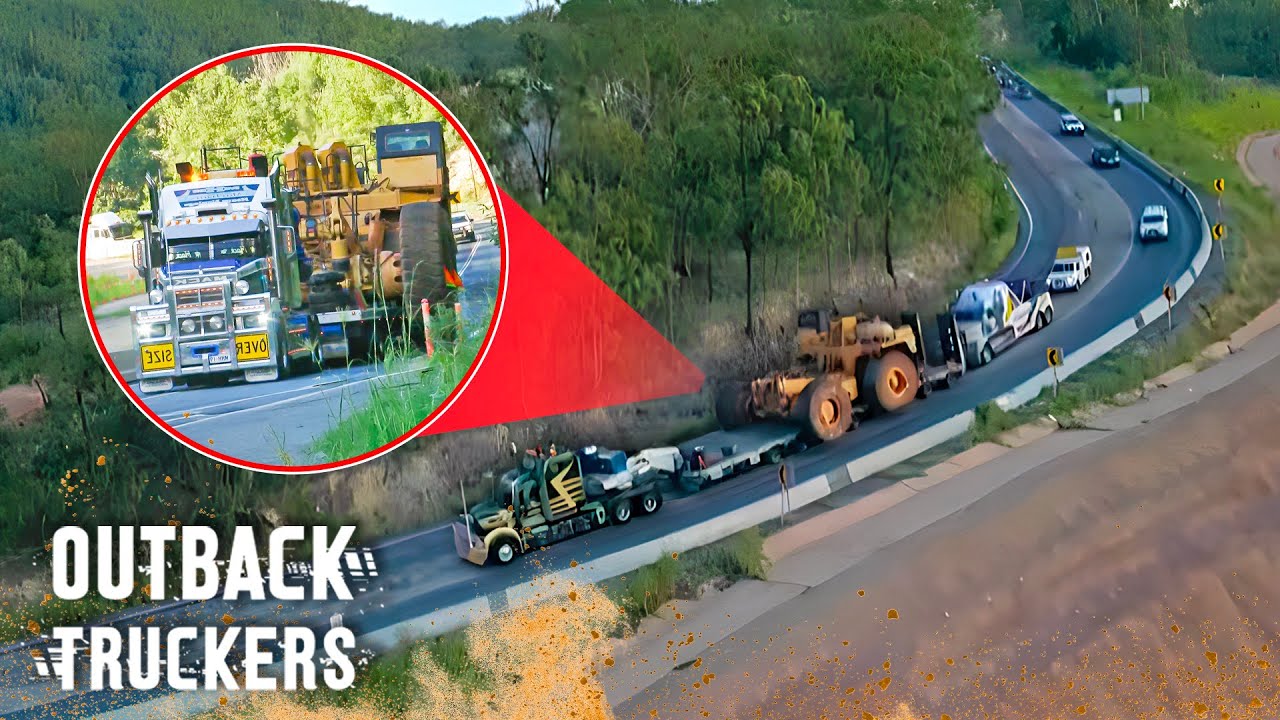
In this episode from Outback Truckers, veteran drivers Ray Kennedy and Craig Oldham haul two mammoth 785 Cat dump truck chassis — each six metres wide and together weighing around 250 tonnes — across remote highways and steep mountain ranges to the Port of Mackay. The job is a case study in logistics, preparation and the practical application of safety principles, including the chain of responsibility; CoR that underpins safe heavy vehicle operations.
Table of Contents
- Overview: the load, the crew and the stakes
- Loading the giants: timber, precision and a flat tyre
- On the road: escorts, permits and environmental hazards
- Tyre failures and roadside improvisation
- Descending Eaton Range: planning and extra braking support
- Arrival and reflection
- Safety, compliance and the chain of responsibility; CoR
- Frequently Asked Questions
- Credits
Overview: the load, the crew and the stakes
The transport involved two heavy-duty prime movers, each pushing a 64-wheel trailer to carry an 85-tonne dumpster chassis. Loading alone took six hours. With police escorts, pilot vehicles and an oversized permit that limits travel hours, the margin for error was small. As Ray says, "Once you get it in your system you can't get it out of it." The crew relied on more than guts — decades of experience and problem-solving under pressure.
Loading the giants: timber, precision and a flat tyre
Because the wheelbase of the dump trucks was wider than the trailers, Ray and Craig used a time-tested technique: back the truck onto timber sleepers, lift slightly and reverse the trailer underneath. It's a delicate balancing act — "like parking an elephant on a postage stamp" — and it almost unravels when one of the three-metre-high tyres goes flat.
With a tyre at dangerously low pressure (these tyres need up to 100 psi), the team had to improvise. The tyre fitter was late, so they lowered the trailer "right on its guts" and manoeuvred the trailer into place using measured movements and clear radio calls. Against the odds the first load was secured just as the fitter arrived.
On the road: escorts, permits and environmental hazards
The convoy left before dawn with two police escorts and three pilot vehicles. With two 6.5-metre-wide loads on public roads, route management, communication with escort vehicles and strict adherence to permit windows were vital. Ray and the crew timed departures to avoid extreme heat, noting the road temperature and the effect on tyre life.
Throughout the 1,230 km journey the drivers faced a sequence of conditions that tested both machine and crew: intense heat, rain-slick roads, a dust storm and narrow bridges where oncoming drivers did not always follow escort directions. Maintaining awareness and adhering to the chain of communication with escorts are practical expressions of the chain of responsibility; CoR in everyday trucking.
Tyre failures and roadside improvisation
Tyres were the convoy’s main vulnerability. After hours of running in high temperatures, one tyre went soft near Longreach; later, nearing Mackay, the convoy suffered two catastrophic tyre blowouts. The explosions damaged brake lines and ripped off an auxiliary air tank, temporarily crippling Craig’s braking system.
Craig’s son Mattie scoured the roadside and recovered the missing air tank. The crew improvised clamps and repaired hoses to restore braking pressure. Their actions illustrate decisive roadside problem-solving, but they also emphasise why formal processes and documentation under the chain of responsibility; CoR are necessary to manage risk before problems escalate.
Descending Eaton Range: planning and extra braking support
Eaton Range is steep and unforgiving. With 150 tonnes pushing down grades of up to 12%, the crew chose caution over speed. Ray called in a block truck to hitch behind Craig’s rig and provide additional braking power. Together they controlled engine revs, used gear braking and coordinated with pilot vehicles to make two cautious descents.
The extra truck cost a few hundred dollars but gave the crew a measurable safety margin. It’s a small but telling example of how decisions — documented and proactive — sit at the heart of the chain of responsibility; CoR.
Arrival and reflection
After battling tyres, weather and tight windows, the convoy reached the port in time. Ray and Craig celebrated another successful haul — and the episode closes as a reminder of the thin line between a routine job and disaster when the elements and time pressures collide.
Safety, compliance and the chain of responsibility; CoR
What this run demonstrates is how operational decisions, communication and contingency planning fulfil legal and ethical obligations under the chain of responsibility; CoR. Key takeaways include:
- Pre‑job planning: route surveys, escort bookings and tyre checks reduce exposure to risk.
- Clear communications: radios, pilot coordination and police liaisons kept the convoy moving safely.
- Documented decisions: hiring a block truck and altering travel windows are examples of accountable choices under the chain of responsibility; CoR.
- Practical redundancy: carrying spare equipment, checking auxiliary air tanks and contingency processes proved critical.
Frequently Asked Questions
Q: What is the chain of responsibility; CoR and why does it matter on jobs like this?
A: The chain of responsibility; CoR is a legal framework that allocates duty across all parties in the supply chain. On oversized transports it ensures that operators, escort providers, drivers and consignees all take reasonably practicable steps to manage risks — from route selection to tyre condition.
Q: How do drivers manage steep descents with heavy loads?
A: They use a combination of planning (timing and speed), mechanical techniques (engine braking, low gears), and extra resources like block trucks to provide additional braking. These measures are recorded and justified under the chain of responsibility; CoR.
Q: What should operators prioritise to avoid blowouts?
A: Regular tyre inspections, monitoring tyre pressures, resting during extreme heat, and planning stops at suitable service centres. Effective decisions here are part of the chain of responsibility; CoR obligations.
Credits
Original footage and story: Outback Truckers. This article summarises and analyses the transport featured in "Truckers Toughest Test! 250 Tonnes, 1 Road, and No Room for Error" to highlight operational lessons and the practical application of the chain of responsibility; CoR.
This article was created from content published by https://www.nhvr.gov.au/. Visit the site for latest and current information.


