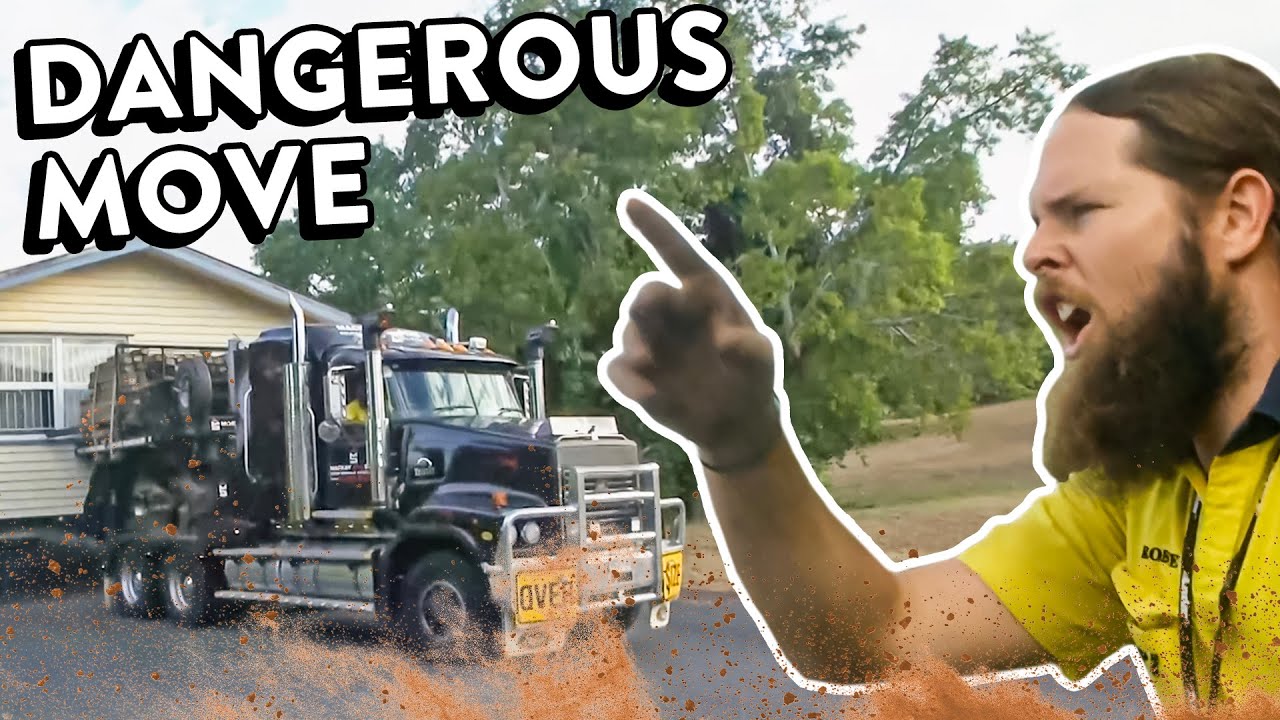
In this nail-biting episode from Outback Truckers, Robbie Mackay and his crew undertake a 700-kilometre transport of an eight-metre-wide timber house. The move is a high-stakes lesson in planning, on-road problem solving and the practical realities of the chain of responsibility; CoR for heavy transport operators and everyone in the supply chain.
Table of Contents
- At a glance: the job
- Morning drama: breakdowns and time pressure
- Back roads and fragile cargo
- The powerline gauntlet: hot sticks and crew coordination
- Lessons for operators and contractors
- Conclusion
- Frequently Asked Questions
At a glance: the job
- Distance: 700 km
- Load: fragile timber house, 8 metres wide and 5.5 metres high
- Convoy: nine vehicles — two prime movers, three pilot cars and two maintenance vans
- Key risks: mechanical breakdown, structural damage to the house, low-hanging live powerlines and tight suburban streets
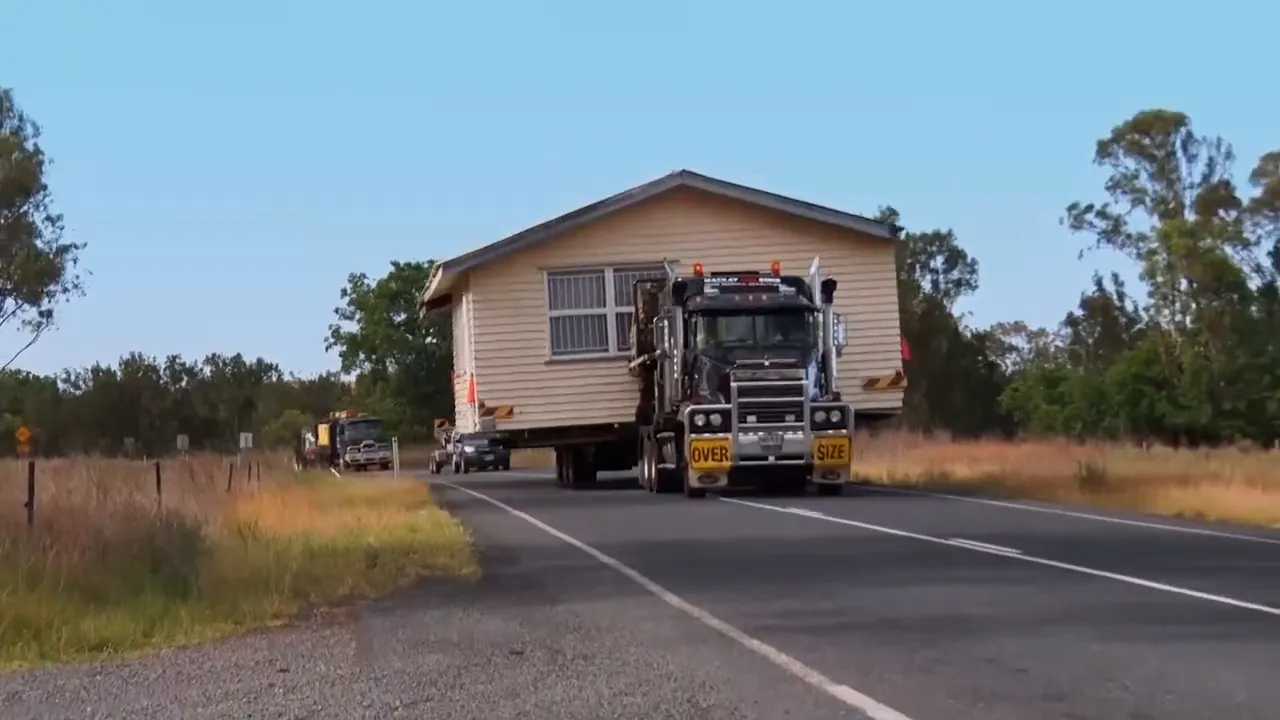
Morning drama: breakdowns and time pressure
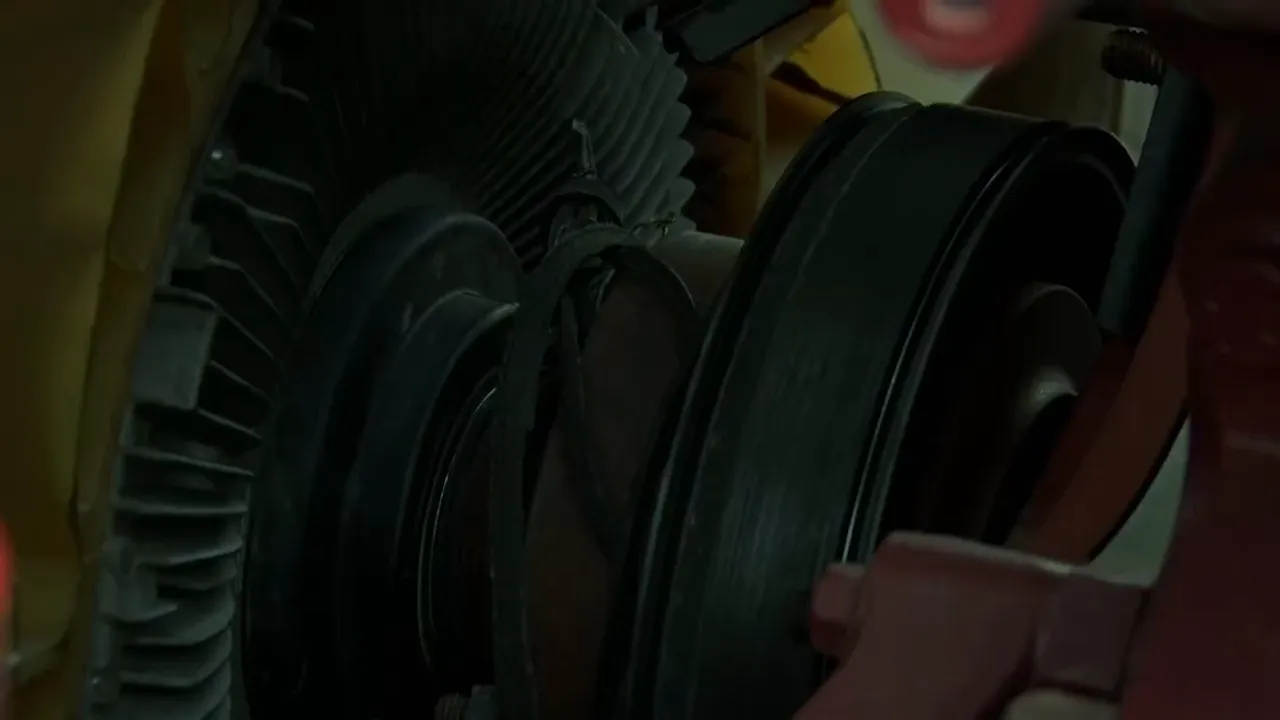
Thirty minutes before sunrise, with a curfew and police oversight looming, one truck starts screaming — the fan belt has come off. The team’s immediate response is practical and decisive: reconfigure the convoy to keep the move rolling while sending the damaged truck to a local mechanic. That contingency planning is an example of operational resilience that sits squarely under the chain of responsibility; CoR expectations for road transport operators and support personnel.
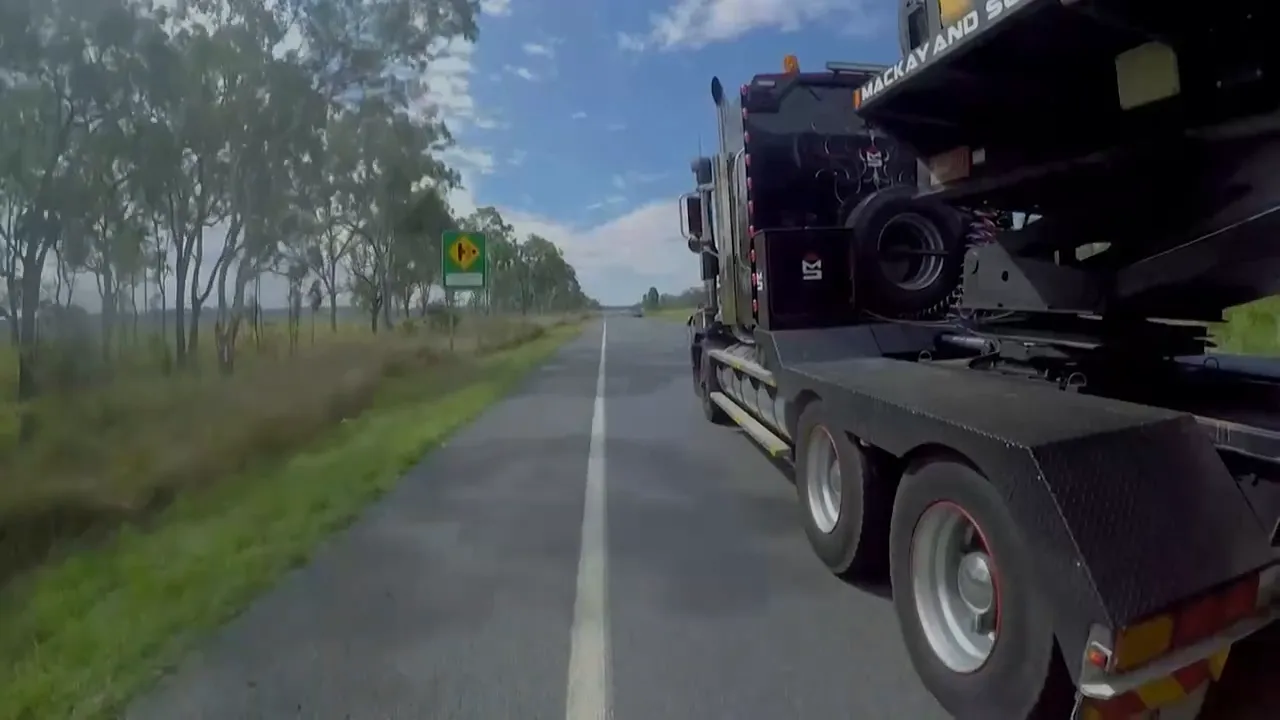
Back roads and fragile cargo
Once the main highways are off limits due to width restrictions, the team is forced onto bumpy back roads. The house rides like it’s in an earthquake — unsecured weatherboards become a constant worry. The crew identifies poor nail work on the cladding and undertakes on-the-fly securing and protection to meet delivery standards. Maintaining condition-of-load and roadworthiness checks is a clear facet of the chain of responsibility; CoR and a duty of care to the customer.
The powerline gauntlet: hot sticks and crew coordination
The last few kilometres into Yeppoon are the toughest: suburban streets with tangled, low-hanging powerlines. With the house towering at 5.5 metres, the crew must physically lift lines using an insulated hot stick to create safe clearance. That sequence — spotters, slow manoeuvres, traffic control and insulated tooling — highlights the exacting operational procedures expected under the chain of responsibility; CoR framework to prevent harm to people, property and infrastructure.
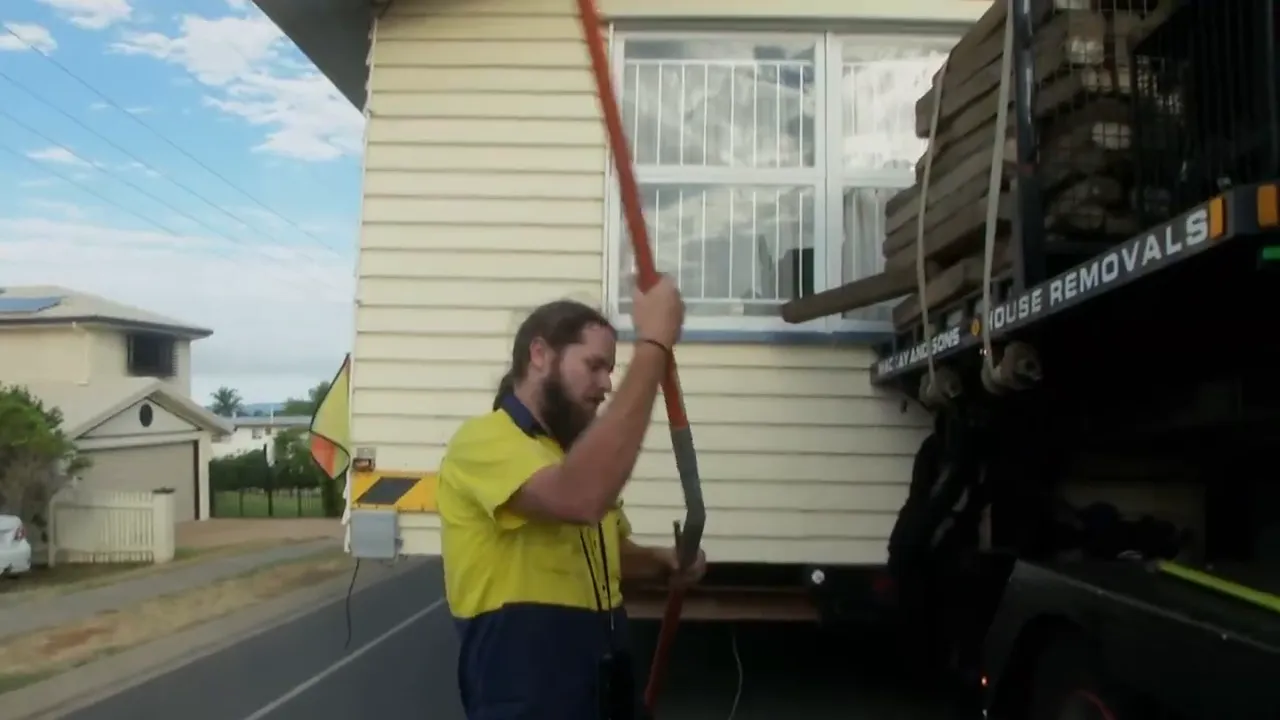
How the team worked safely
- Rapid assessment and reconfiguration when the fan belt failed.
- Use of pilot cars and maintenance vans to manage flow and immediate repairs.
- On-the-spot load protection to reduce weatherboard damage.
- Trained use of insulated tools and spotters to negotiate live powerlines.
- Clear radio calls and methodical, slow driving through built-up areas.
Lessons for operators and contractors
Whether you move houses or operate other heavy loads, this move illustrates practical obligations under chain of responsibility; CoR: pre-move route assessment, vehicle maintenance regimes, competent crews, toolbox talks for electrical hazards and robust contingency plans for breakdowns.
Conclusion
After 12 hours of intense driving and careful manoeuvring through the powerline maze, the team manoeuvred the house into its block. The job is a case study in teamwork, resourcefulness and the everyday application of the chain of responsibility; CoR. Credit to Outback Truckers for capturing the operation and the lived realities of oversized transport.
Frequently Asked Questions
Q: What is the chain of responsibility; CoR?
A: The chain of responsibility; CoR is the legal principle that holds all parties in the transport chain accountable for safety — operators, drivers, loaders and others. It requires proactive risk management and duties to prevent breaches such as overloading or unsafe practices.
Q: Do oversized moves need permits?
A: Yes. Oversize or overmass moves typically require access permits, route approvals and often police or local traffic coordination. Pre-planning is critical to comply with CoR obligations.
Q: How do crews safely handle live powerlines?
A: Only trained personnel should handle energized lines. Safe techniques include power authority coordination, using insulated tools (hot sticks), spotters, and maintaining strict clearance distances. If in doubt, contact the network operator.
Q: What should be done if a vehicle breaks down mid-move?
A: Have a contingency plan: reconfigure the convoy where safe, deploy maintenance support or tow services, notify authorities if required, and ensure the load remains secure and safe until repairs or recovery are complete. These steps are part of meeting chain of responsibility; CoR duties.
Source: Video footage by Outback Truckers. For the full experience, watch the original episode and subscribe to the Outback Truckers channel.
This article was created from content published by https://www.nhvr.gov.au/. Visit the site for latest and current information.


