One of the most frequent questions drivers ask when it comes to compliance and safety is how to accurately determine a 24 hour period for counting work and rest time. Understanding this concept is essential for drivers operating under standard hours to ensure they remain compliant with regulations and maintain their safety on the road. In this article, we’ll break down the key points around counting a 24 hour period, clarify common misconceptions, and walk through a detailed example involving consecutive workdays. By the end, you’ll be equipped with a clear understanding of how to manage your work diary and rest breaks effectively.
Table of Contents
- What Is a 24 Hour Period in Counting Time?
- Multiple 24 Hour Periods Can Overlap
- A Practical Example: Alex’s Five Consecutive Day Work Period
- Ensuring Compliance Across Multiple 24 Hour Periods
- Additional Resources and Tips
- Frequently Asked Questions (FAQ)
- Conclusion
What Is a 24 Hour Period in Counting Time?
Many drivers mistakenly believe that the 24 hour period is confined to a single work diary page or that it resets automatically after taking any rest break. However, this is not the case. The 24 hour period for counting time is defined differently, and it’s crucial to grasp these distinctions to avoid compliance issues.
- The 24 hour period is not limited to one work diary page. This means that your work and rest times can span across multiple diary pages but still fall within the same 24 hour period.
- The 24 hour period does not reset simply by taking a rest break. Taking a rest break does not erase or restart the counting period; instead, it might trigger the start of a new 24 hour period depending on the type of rest break taken.
So, what exactly starts a new 24 hour period? It begins at the end of what is known as a relevant major rest break. This is a continuous stationary rest break of at least seven hours or more. For example, if you finish a relevant major rest break at 7 AM, that marks the beginning of a 24 hour period, which will then end at 7 AM the following day.
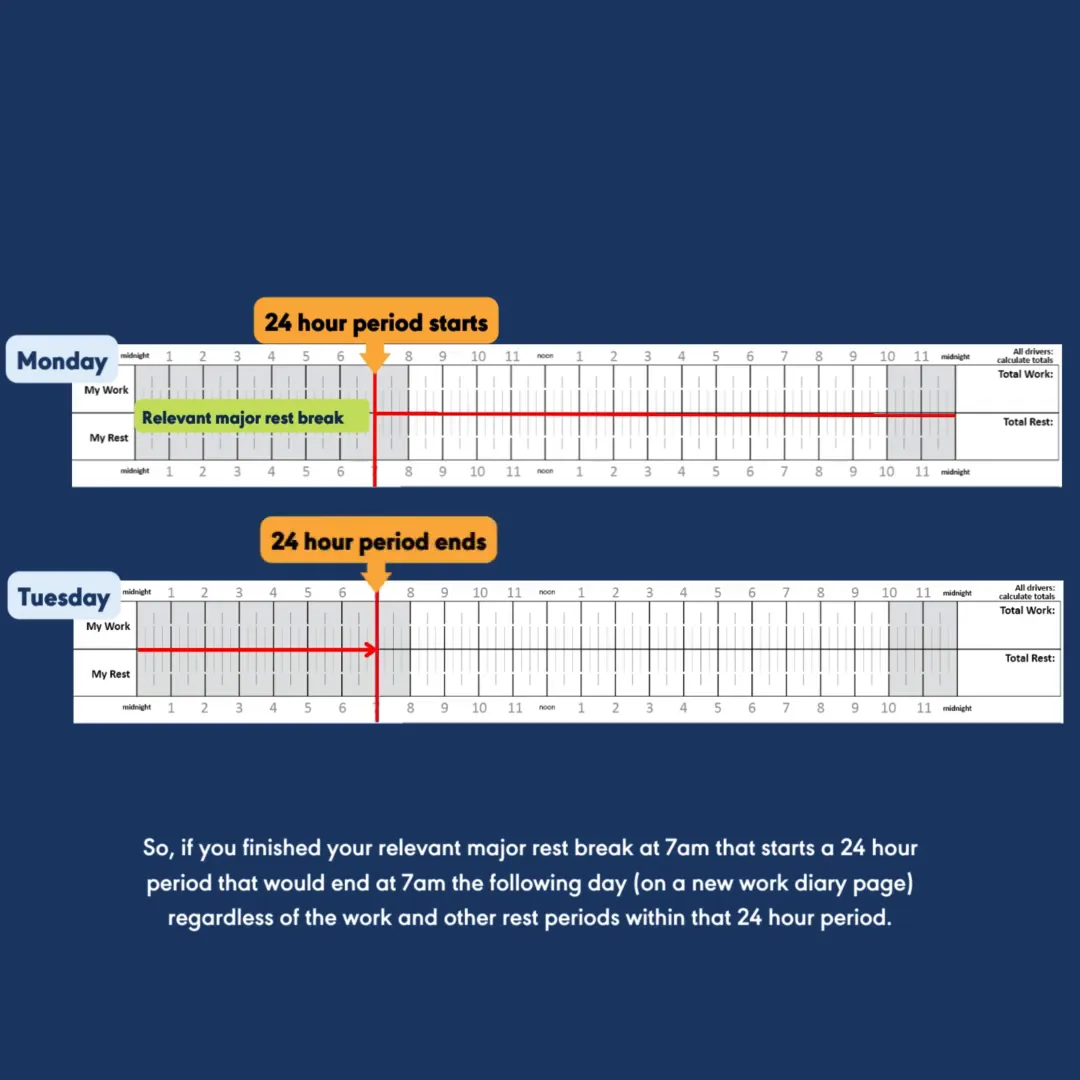
It’s important to note the difference between a relevant and irrelevant major rest break. An irrelevant major rest break, in this context, is also a continuous stationary rest break of seven hours or more but does not start a new 24 hour period for counting time purposes.
Multiple 24 Hour Periods Can Overlap
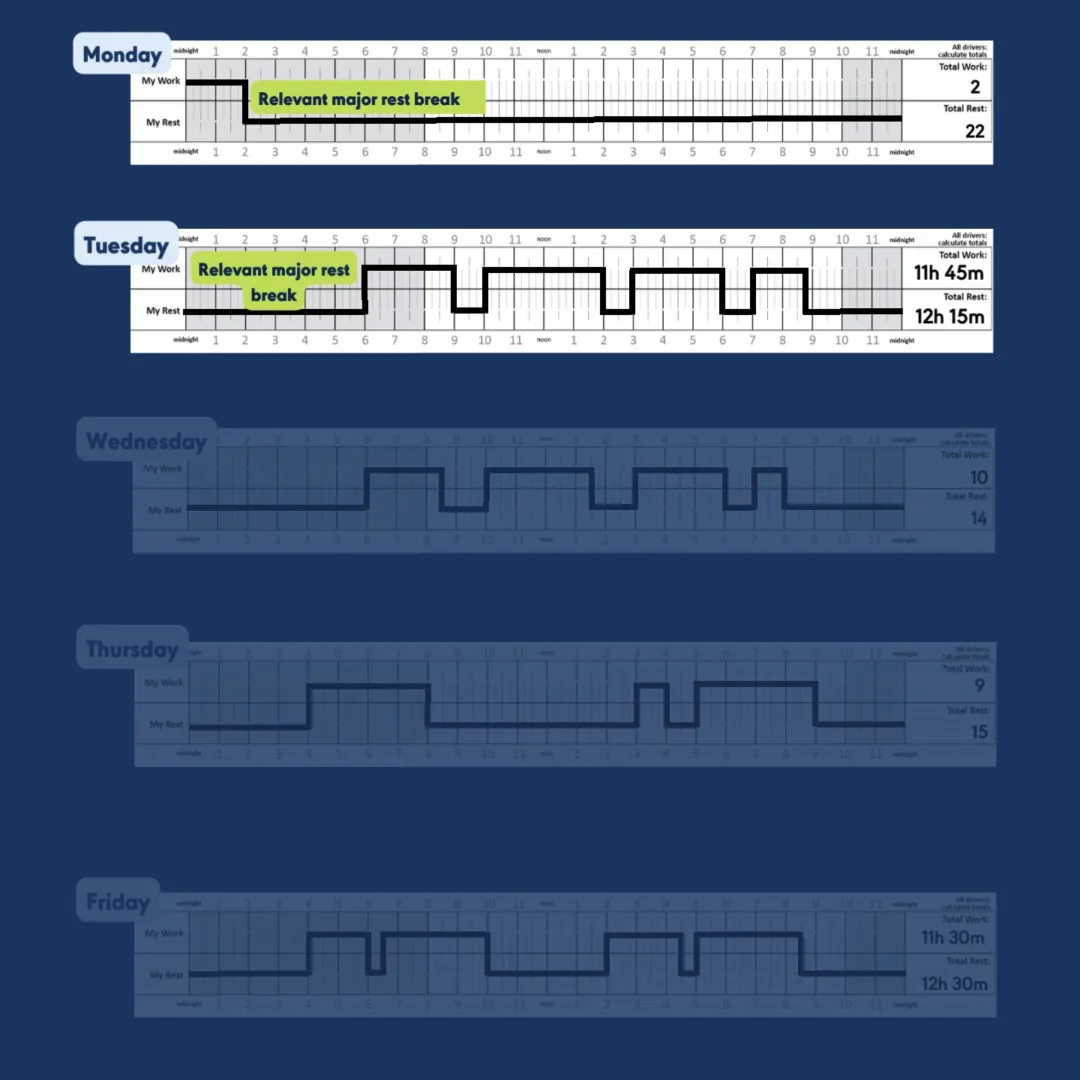
Another critical point is that it’s possible to have multiple 24 hour periods running simultaneously. This can happen during consecutive workdays when rest breaks and work start times shift. Understanding this overlap is vital for drivers to ensure all their work and rest periods comply with regulations within each 24 hour cycle.
Why Can Multiple 24 Hour Periods Run at the Same Time?
Because each 24 hour period starts at the end of a relevant major rest break, if a driver starts work earlier than the previous day, the new 24 hour period may overlap with the prior one. This means a driver must keep track of their activities within both periods simultaneously to remain compliant.
A Practical Example: Alex’s Five Consecutive Day Work Period
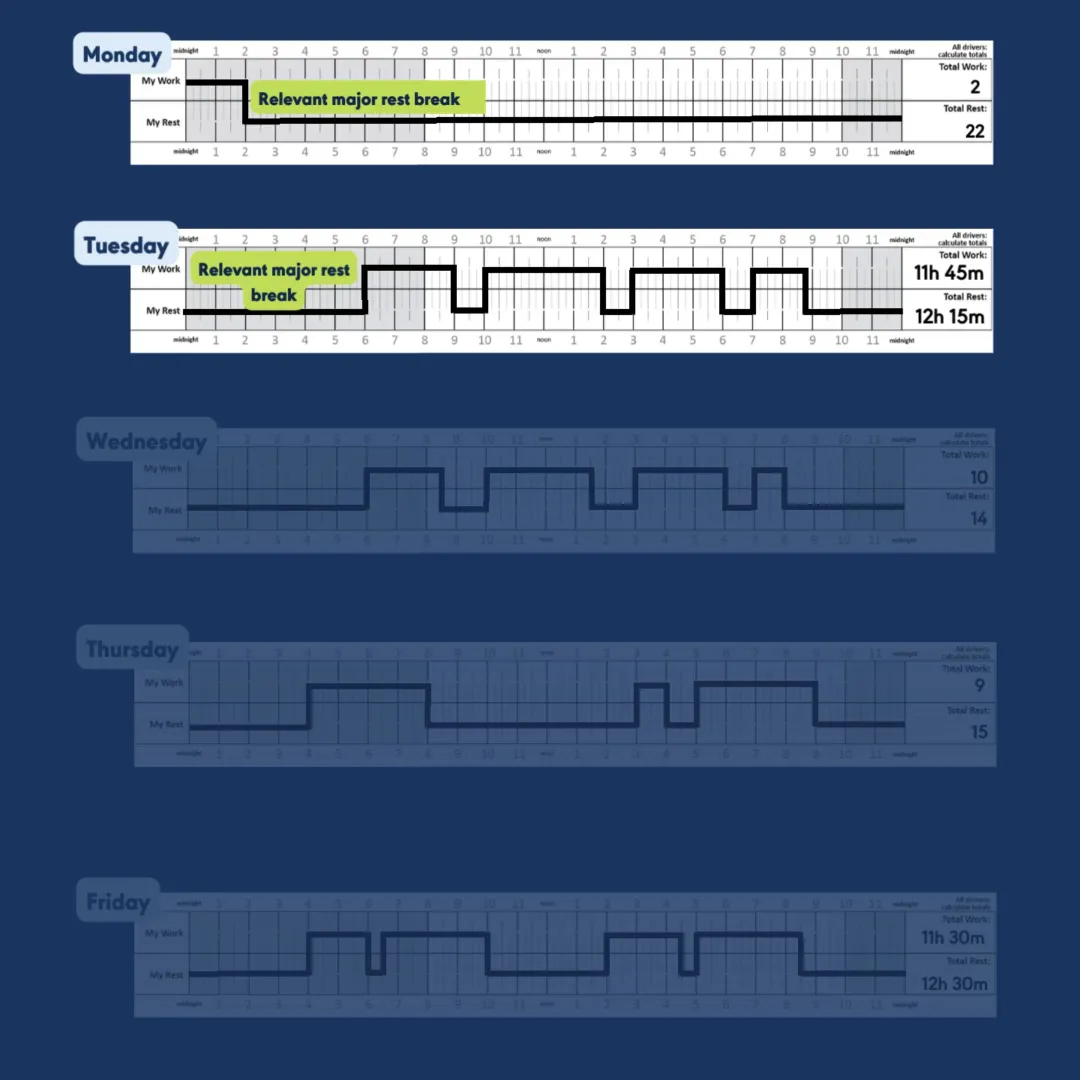
To illustrate these concepts, let’s look at an example involving a driver named Alex, who operates under standard hours and is required to have a minimum seven hour continuous stationary rest break in every 24 hour period. This rest break serves as Alex’s relevant major rest break.
Monday
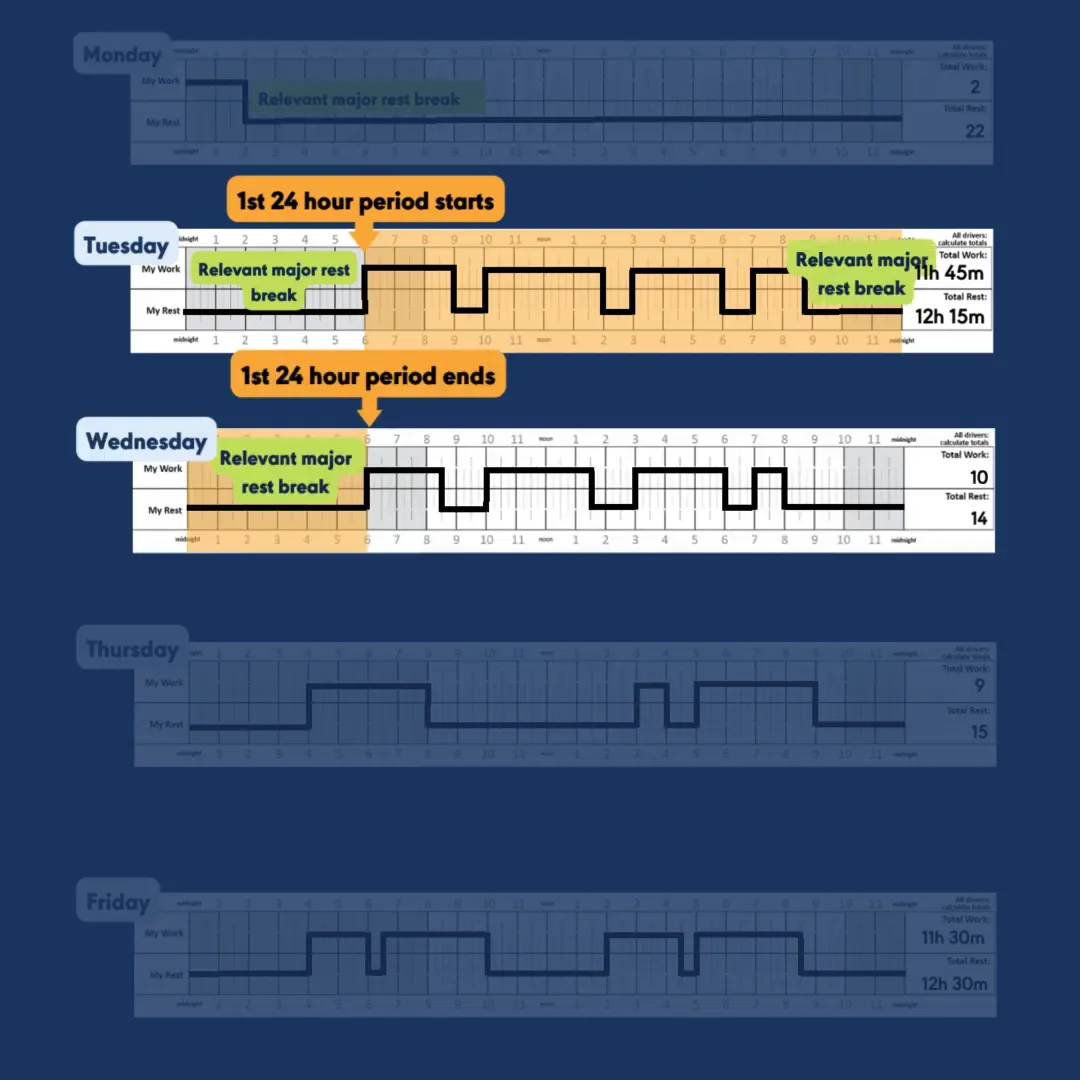
Alex works only two hours on Monday and then takes a rest break starting at 2 AM. This rest break is the relevant major rest break that will mark the beginning of the next 24 hour period.
Tuesday
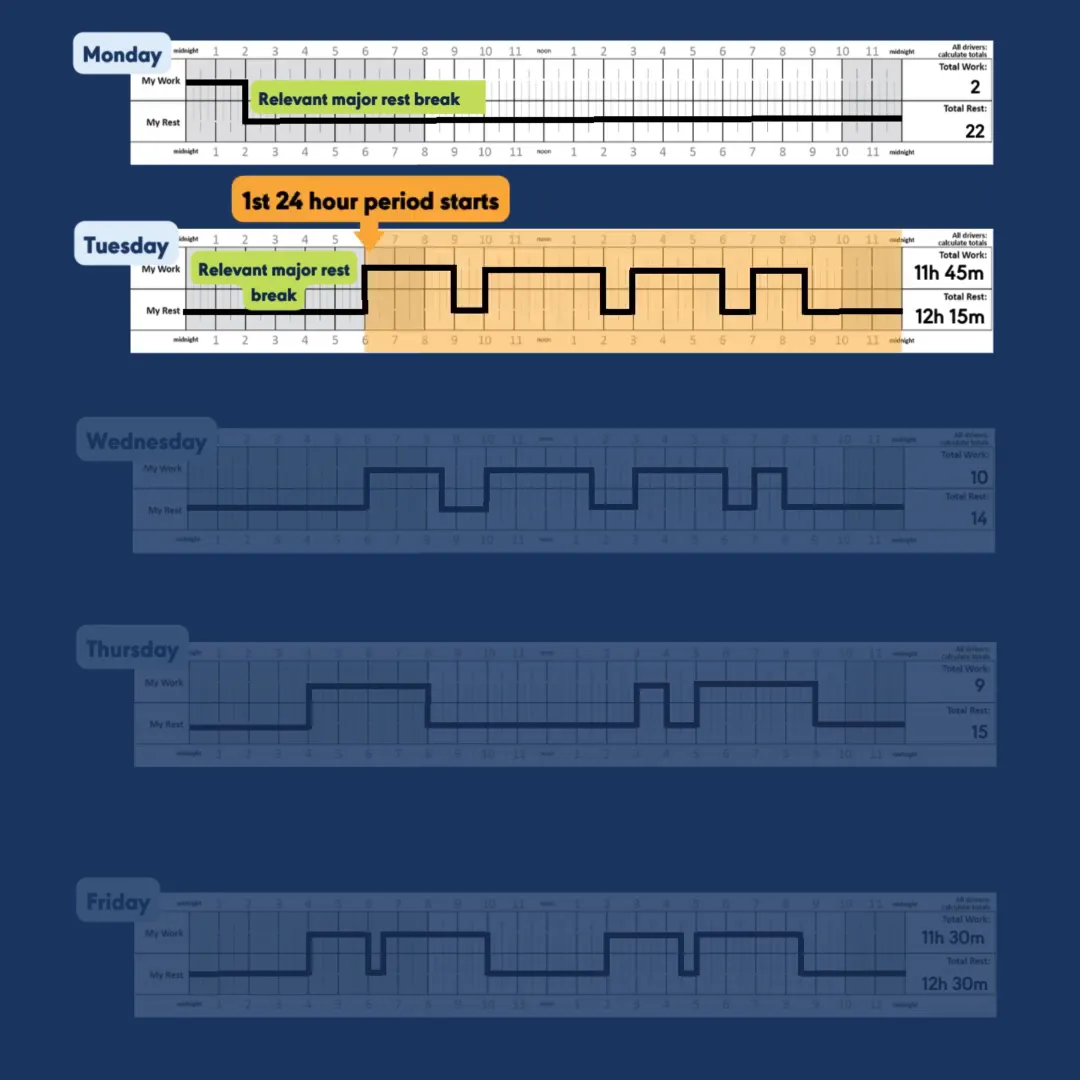
Alex finishes the relevant major rest break at 6 AM on Tuesday and begins work immediately afterward. This moment—6 AM Tuesday—starts Alex’s first 24 hour period, which will end at 6 AM on Wednesday.
Wednesday
On Tuesday night, Alex takes another relevant major rest break from 8:45 PM until 6 AM Wednesday. This rest break initiates the second 24 hour period, which runs from 6 AM Wednesday until 6 AM Thursday.
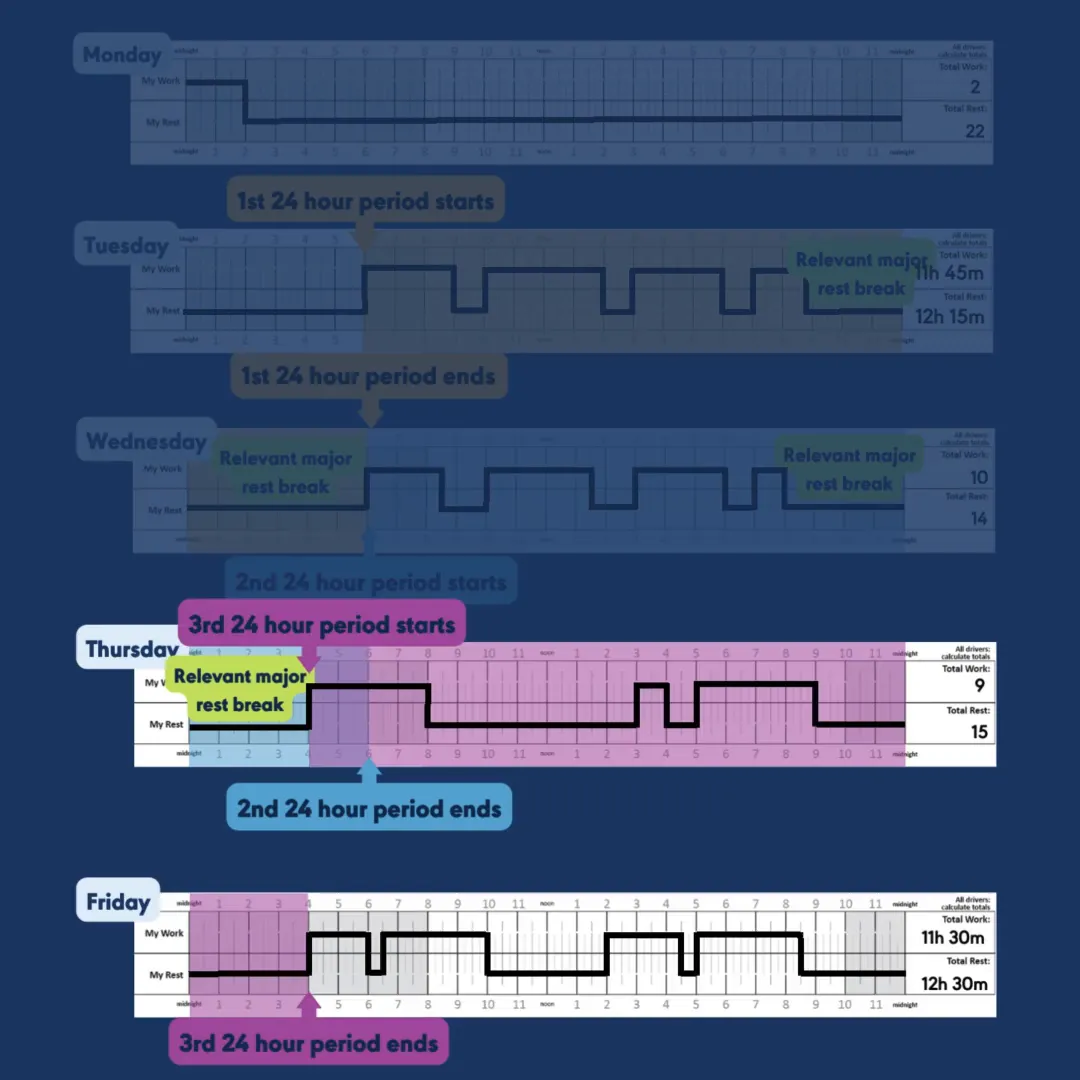
Later on Wednesday evening, Alex takes yet another relevant major rest break from 8 PM to 4 AM Thursday. This rest break starts the third 24 hour period, which overlaps with the second period for two hours—from 4 AM to 6 AM Thursday.
Overlapping Periods Explained
The overlap happens because Alex started work two hours earlier on Thursday compared to Wednesday. This means Alex must ensure that the work and rest times within both the second and third 24 hour periods are compliant.
Thursday
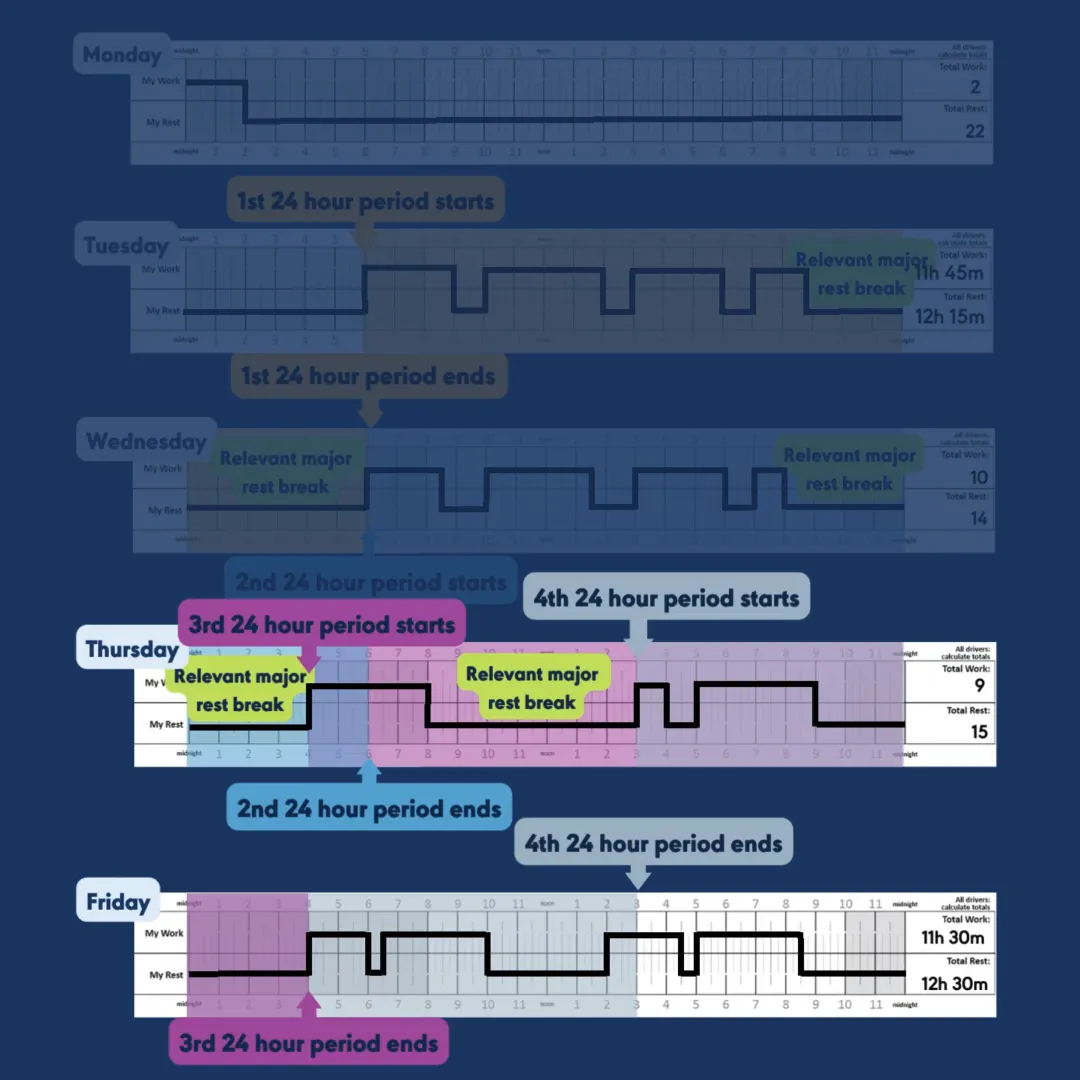
On Thursday, Alex takes a relevant major rest break from 8 AM through to 3 PM. This rest break starts the fourth 24 hour period. Alex now has multiple 24 hour periods to manage concurrently.
Ensuring Compliance Across Multiple 24 Hour Periods
Because starting a new 24 hour period does not reset previous periods, Alex must carefully monitor work and rest times to ensure compliance within each active 24 hour cycle. This means:
- Tracking work hours and rest breaks accurately across diary pages
- Confirming that each 24 hour period contains the required minimum continuous stationary rest break
- Being aware of overlapping periods and managing time accordingly
Failing to do so can result in non-compliance, which may lead to penalties and compromise driver safety.
Additional Resources and Tips
For more detailed guidance and examples on counting time and managing your work diary effectively, consult part three, pages 21 to 25 of the work diary. These sections provide comprehensive instructions and scenarios that can help clarify any uncertainties.
Frequently Asked Questions (FAQ)
1. Does a 24 hour period reset after any rest break?
No. A 24 hour period only begins at the end of a relevant major rest break, which is a continuous stationary rest break of seven hours or more. Other rest breaks do not reset the 24 hour period.
2. Can multiple 24 hour periods overlap?
Yes. If a driver starts work earlier than the previous day, overlapping 24 hour periods can occur. In such cases, the driver must ensure compliance within each period simultaneously.
3. What is the difference between a relevant and irrelevant major rest break?
A relevant major rest break is a continuous stationary rest break of seven hours or more that starts a new 24 hour period. An irrelevant major rest break is also a continuous stationary rest break of seven hours or more but does not start a new 24 hour period for counting time.
4. How can I track multiple 24 hour periods simultaneously?
Use your work diary to carefully log work and rest times across days. Pay close attention to the end times of relevant major rest breaks to identify when new 24 hour periods begin and manage your hours accordingly.
5. Where can I find more examples and detailed explanations?
Refer to part three, pages 21 to 25 of your work diary for further details and examples regarding counting time and managing 24 hour periods.
Conclusion
Understanding how to determine a 24 hour period for counting time is fundamental for drivers operating under standard hours. Remember that the 24 hour period is not limited to a single work diary page and does not reset simply by taking any rest break. Instead, it begins at the end of a relevant major rest break — a continuous stationary rest break of seven hours or more.
By reviewing the example of Alex’s consecutive workdays, it becomes clear that multiple 24 hour periods can overlap, requiring drivers to carefully track and manage their work and rest periods to ensure compliance. Properly managing these periods protects drivers from violations and helps maintain safety on the road.
If you have more questions about managing your work diary or understanding counting time, don’t hesitate to seek further guidance and always keep your records accurate and up to date.
This article was created from the NVHR video 'Counting Time' found on the NHVR Website


